Goldendoodle Ear Cleaning and Nail Trimming: A Real Owner's Guide
By Our Doodle Life
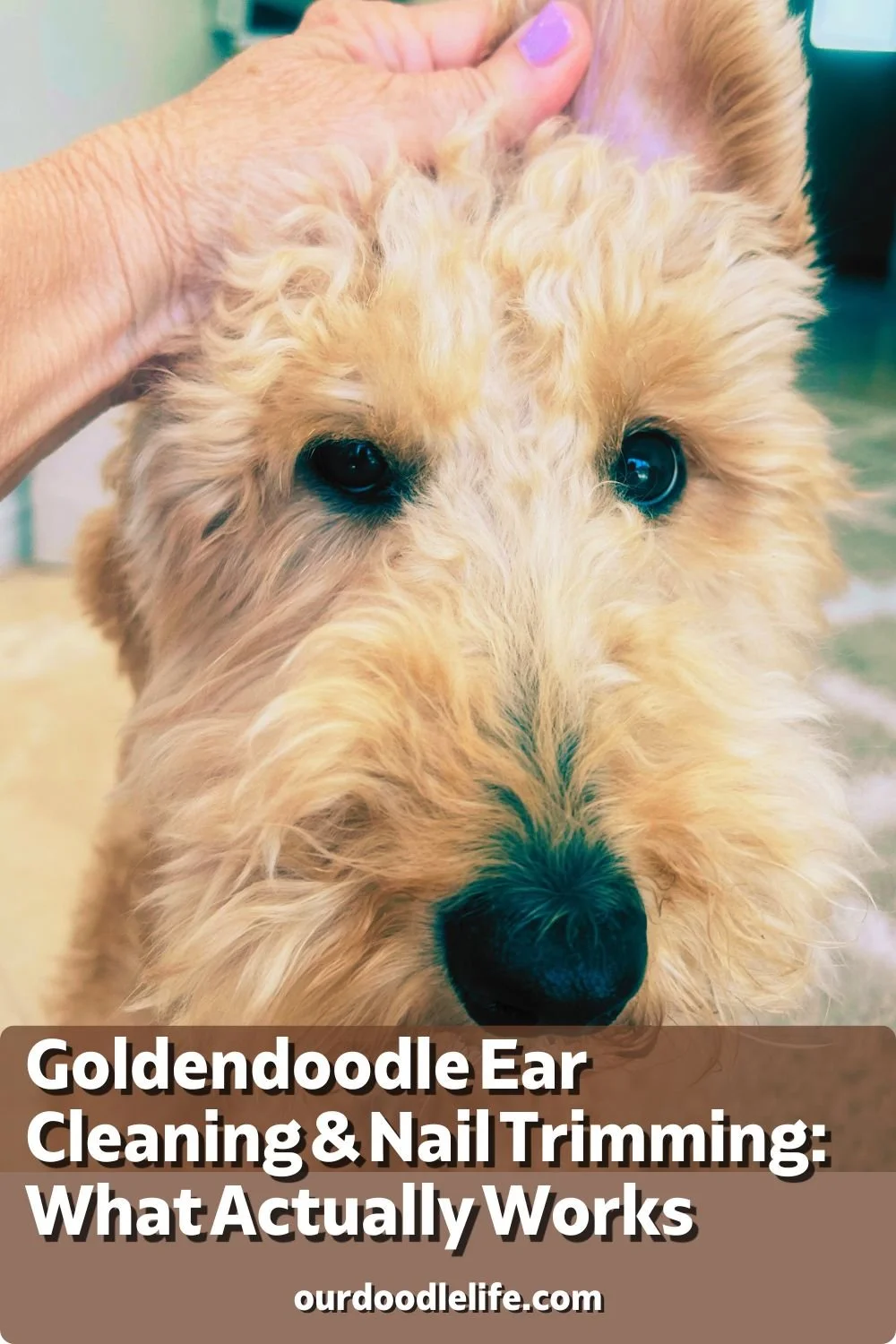
Byrdie the Goldendoodle is ready for her ear cleaning — grooming tips from Our Doodle Life.
We have three Goldendoodles — Kai, Byrdie, and Zuma — and all three have completely different relationships with their ears. Zuma has chronic ear infections despite consistent care and takes Apoquel for allergies. Kai gets the occasional infection that clears up quickly once I clean his ears. Byrdie has never had a single ear infection in her life.
Same breed. Same household. Three completely different ear profiles.
That experience taught me something early on: genetics and anatomy matter just as much as routine when it comes to ear health. Knowing your individual dog's tendencies — and having the right products on hand — is half the battle. This guide covers everything I've learned from years of managing ear cleaning and nail trimming across three Goldendoodles at home.
Why Goldendoodles Are Prone to Ear Issues
Goldendoodles are particularly susceptible to ear problems for a few structural reasons. Their floppy ears lay flat against the head, which traps moisture and limits airflow inside the ear canal. That warm, damp environment is exactly where yeast and bacteria thrive.
On top of that, many Goldendoodles grow dense fur inside the ear canal itself. That hair traps debris and makes it harder for the ear to self-clean, which is why regular maintenance matters even for dogs that have never had an infection.
Allergies are another significant factor. Zuma's chronic ear infections are directly tied to her allergies — she takes Apoquel to manage them, but her ears still require extra vigilance. If your Goldendoodle has recurring ear infections that don't resolve easily, it's worth having a conversation with your vet about whether allergies could be the underlying cause.
The three ear profiles I've seen firsthand:
Infection-prone — like Zuma, where genetics and allergies create a perfect storm regardless of how diligent you are
Occasionally prone — like Kai, where consistent cleaning prevents most issues and early intervention resolves the rest
Never an issue — like Byrdie, where the anatomy just works in their favor
Knowing which profile your dog falls into helps you calibrate how often to clean and how closely to monitor.
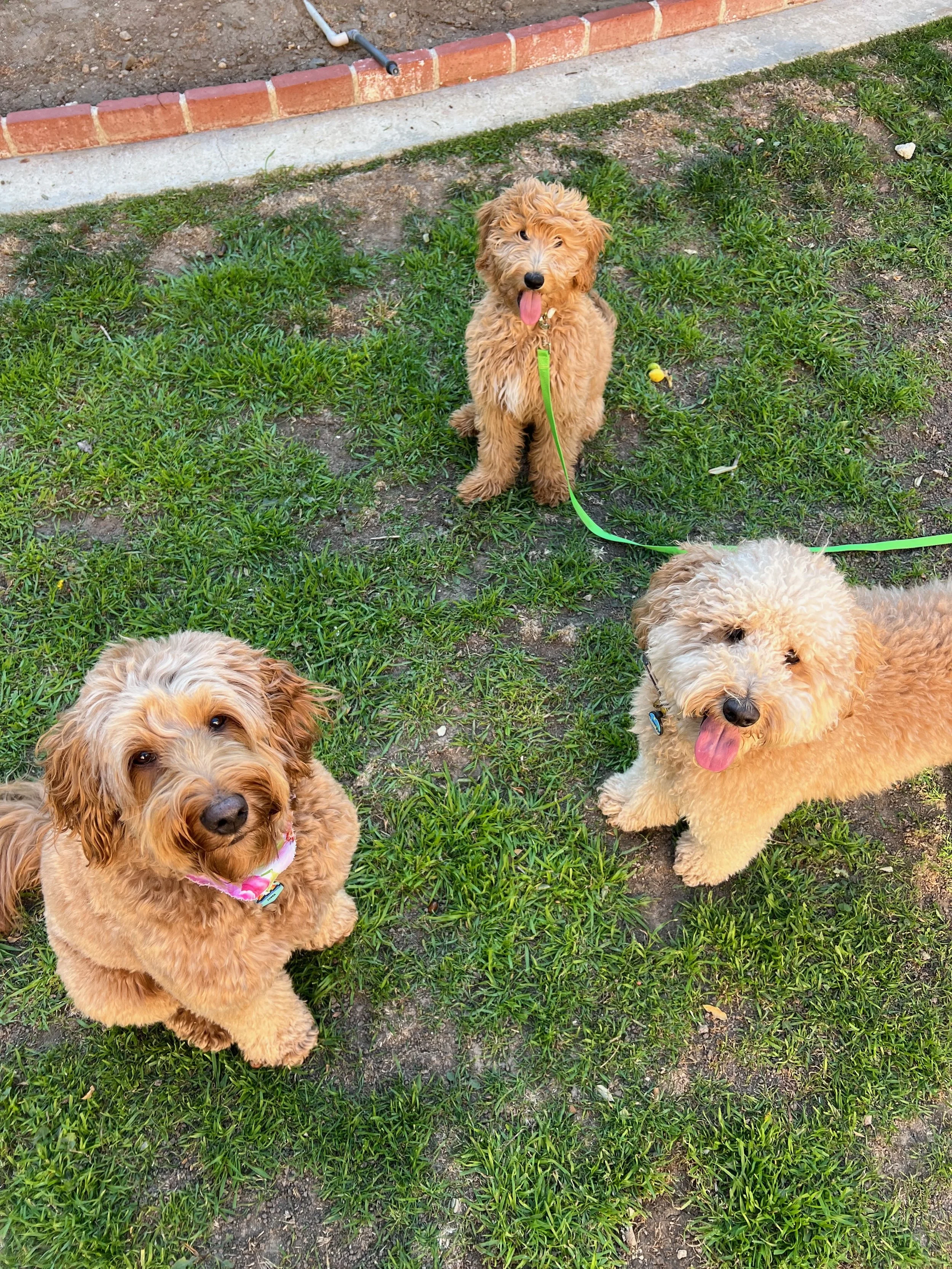
Kai, Byrdie and Zuma the Goldendoodles
Each dog has completely different ear care needs.
How Often to Clean Your Goldendoodle's Ears
For most Goldendoodles, cleaning every few weeks is a reasonable baseline. I clean Kai and Byrdie's ears on this schedule and it keeps things in check. Zuma gets more frequent attention given her history.
A few situations call for cleaning outside of your regular schedule:
After swimming or baths — water trapped in the ear canal is one of the most common triggers for infection, so always dry and clean the ears afterward
After a heavy rain walk — same principle
Anytime you notice early warning signs — head shaking, pawing at the ear, an unusual odor, or visible debris are all signals to clean now rather than wait for the next scheduled session
Catching an infection early makes a significant difference. Kai's ear infections have always resolved quickly because I act the moment I notice him shaking his head or scratching at his ear. Waiting even a few extra days can turn a minor irritation into something that needs veterinary attention.
Products That Actually Work
After trying several options over the years, these are the two products I keep stocked at all times:
Zymox Otic Enzymatic Solution with 1% Hydrocortisone
This is my go-to ear cleaner and the one I reach for first when I see early signs of infection. The enzymatic formula works by breaking down the bacteria and yeast causing the irritation, while the 1% hydrocortisone helps calm the inflammation and relieve itching. It's available over the counter and has been genuinely effective for Kai's occasional infections.
One important note: Zymox should not be used alongside other ear cleaners or medications at the same time — the enzymes need to work on their own to be effective. If you're already using another product, clean the ear thoroughly and wait before switching to Zymox.
HAPPY JACK Ear Canker Powder
This is a drying powder I use as part of regular maintenance. Moisture is the enemy of healthy ears in Goldendoodles, and this powder helps absorb it, particularly useful after baths or swims. It also helps discourage the buildup that leads to infection in the first place. I use it as a preventive tool rather than a treatment.
When to Stop DIY and Call the Vet
There's a clear line between what you can manage at home and what needs professional treatment. If your dog's ear infections are frequent, severe, or not resolving with over-the-counter care, see your vet. Zuma's situation is a good example — her infections are tied to systemic allergies that require prescription management. No amount of ear cleaning alone was going to solve that.
Signs it's time for a vet visit:
Infections that don't clear within a few days of home treatment
Strong odor or discharge
Significant swelling or redness
Your dog seems to be in pain when you touch the ear
Recurring infections (more than two or three times a year)
Step-by-Step Ear Cleaning
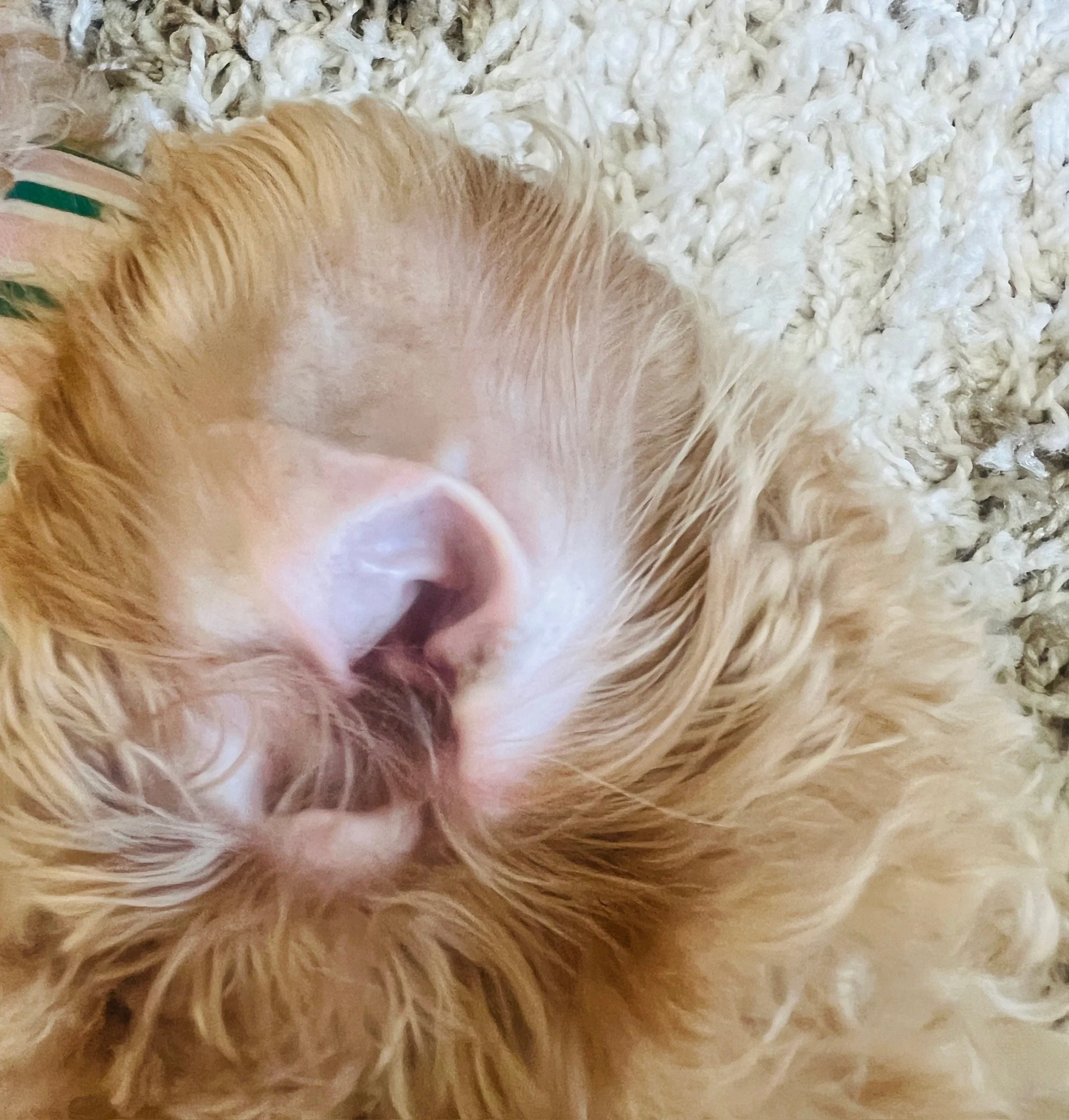
Byrdie the Goldendoodle’s ear cleaning
Before the ear cleaning. She has healthy ears with no signs of infection.
What you need:
Zymox Otic or your preferred enzymatic ear cleaner
Cotton balls or gauze pads (never cotton swabs)
Treats (I buy these specifc treats in bulk and my dogs love them)
The process:
Set the mood — do this when your dog is calm, not right after a walk or playtime when they're wound up. Keep your voice relaxed and matter-of-fact.
Apply the ear cleaner — gently lift the ear flap and apply the solution directly into the ear canal according to the product directions. Don't probe deeply.
Massage the base of the ear — you'll hear a squishing sound. Massage for about 30 seconds to work the solution down into the canal.
Let them shake — step back and let your dog shake their head. This brings debris up and out of the canal naturally.
Wipe the outer canal — using a cotton ball or gauze pad, gently wipe the visible part of the ear canal and the inner ear flap. Only clean what you can see — never insert anything deeper.
Apply drying powder if using — a light dusting of HAPPY JACK Ear Canker Powder after cleaning helps absorb any remaining moisture.
Reward immediately — finish every session with a treat. Positive association makes every future cleaning easier.
Nail Trimming: Why I Use a Dremel Instead of Clippers
All three of our Goldendoodles have dark nails. That one fact shaped my entire approach to nail trimming.
With dark nails, you can't see the quick — the blood vessel that runs through the nail. Clip too short and you'll hit it, which hurts the dog and causes bleeding. It's a risk that makes even experienced owners nervous. Clippers require a level of precision that's genuinely hard to achieve when you're working blind.
A Dremel (mine is part of an entire grooming vacuum kit). This takes that risk largely off the table. Instead of making a decisive cut, you're grinding the nail down gradually in small increments. You can stop and check your progress after each pass, which makes it nearly impossible to accidentally go too deep. For dark-nailed dogs, it's a much more forgiving tool.
Getting Your Goldendoodle Comfortable with the Dremel
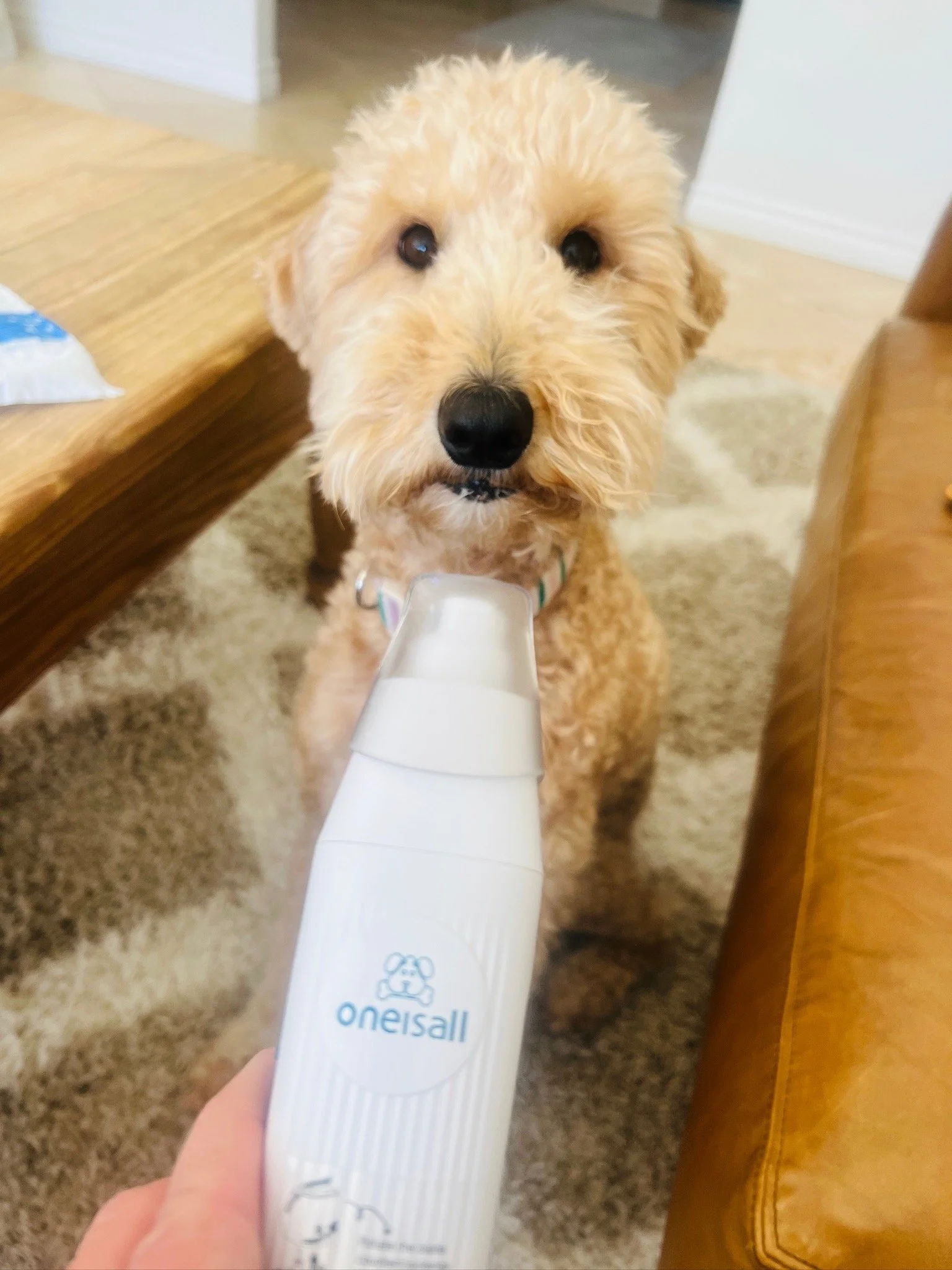
Byrdie the Goldendoodle
Ready for her nail trim with the dremel.
I won't pretend all three of my dogs immediately loved the Dremel — they didn't. The sound and vibration are unfamiliar, and some dogs find it alarming at first. Here's the approach that worked for us:
Start with the sound alone. Turn the Dremel on near your dog without touching them. Let them sniff it. Reward them for calm behavior around it. Do this for several sessions before you ever touch a nail.
Keep sessions short. When you do start grinding, do one or two nails at most in the first few sessions. Stop before your dog gets anxious. You want them to associate the Dremel with a calm, brief, rewarding experience — not something that goes on forever.
Break it up across sessions. I don't always do all four paws at once. Doing the front paws one day and the back paws another day is a completely legitimate approach, especially with a dog that's still getting used to the process. A few short sessions spread across a week is better than one long session that ends with a stressed dog.
Always end on a good note. Stop while things are still going well, before your dog starts showing signs of stress. Finish with a high-value treat. Over time, most dogs come to tolerate it well — and some even become indifferent to it entirely.
At-Home Maintenance vs. Groomer and Vet
I think of the Dremel as a maintenance tool rather than a replacement for professional nail care. For thorough nail trims — especially if nails have gotten longer between sessions — I rely on our groomer or get it done at vet appointments. Groomers and vets have the right equipment and experience to handle nails that need more significant work.
How often should you trim? The simplest test: if you can hear your dog's nails clicking on hard floors, they're overdue. For most Goldendoodles, that means maintenance every two to three weeks. Regular grinding with a Dremel between groomer visits keeps the quick receded over time, which actually makes future trims easier.
When to Leave It to the Professionals
Both ear care and nail trimming have situations where the right call is to step back and let a professional handle it.
For ears: If your dog has a confirmed ear infection that isn't responding to home treatment, or if you suspect a deeper problem, your vet is the right resource. Groomers can also pluck excess ear hair during appointments, which is worth requesting if your dog is prone to debris buildup.
For nails: Groomer appointments and vet visits are the right time for more thorough nail work, especially if nails have grown long. Don't hesitate to ask your vet to check the ears at the same time — it's a natural part of a routine exam and they can spot early issues you might miss at home.
The goal of home maintenance isn't to replace professional care — it's to extend the time between appointments and catch small problems before they become bigger ones.
Products Mentioned in This Post
Pet Grooming Vacuum With Nail Grinder
As a participant in the Amazon Services LLC Associates Program, I earn fees paid by Amazon for qualifying purchases.
Related posts: