How to Prevent and Remove Mats in Goldendoodles: What Actually Works
By Our Doodle Life
As a participant in the Amazon Associates Program, I earn fees from purchases made through links in this post at no additional cost to you.
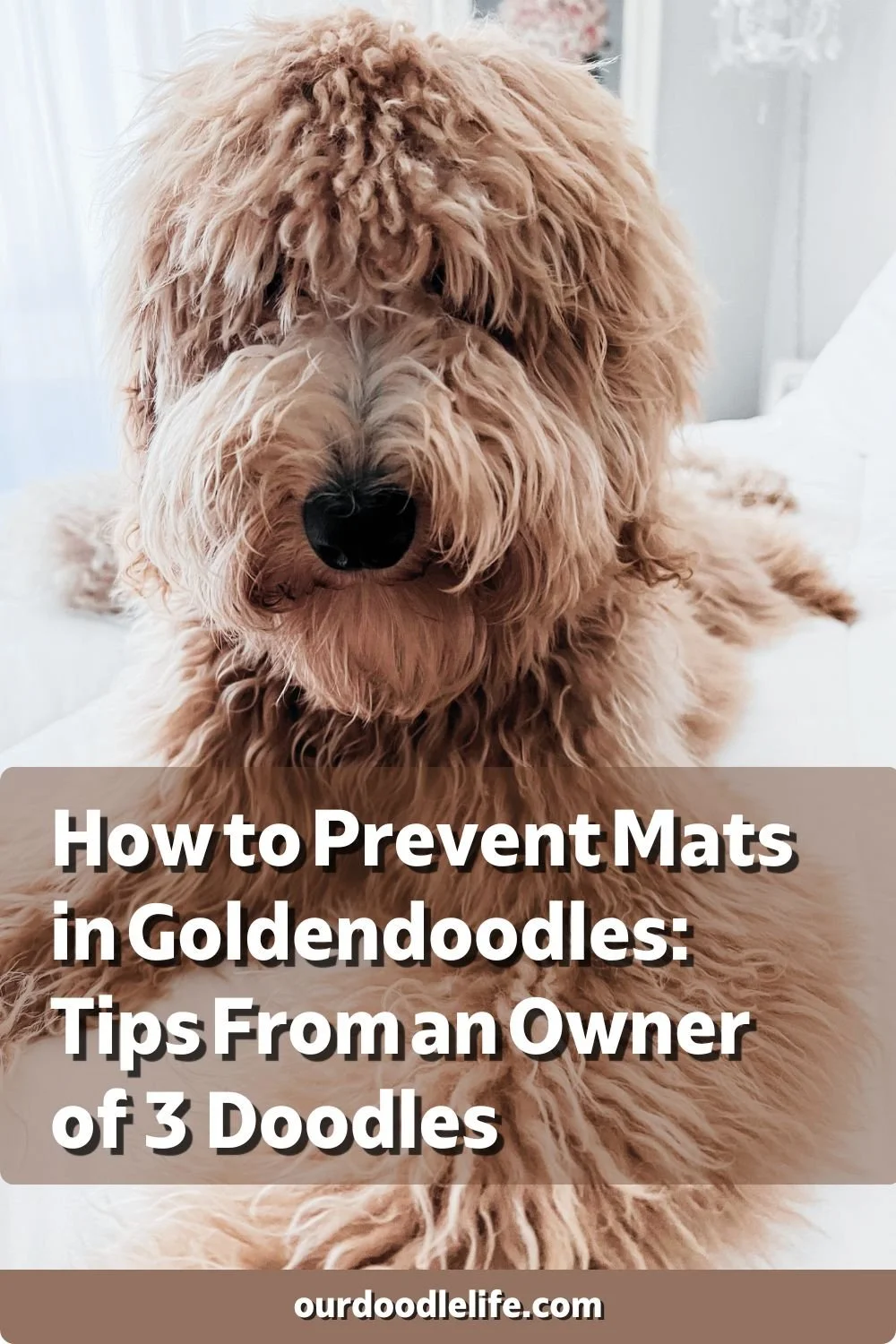
Goldendoodle matting is inevitable with a curly coat — unless you stay on top of it.
If you have a Goldendoodle with a curly coat, matting isn't a possibility — it's an inevitability if you're not staying on top of it. Kai has a tight curly poodle coat that mats faster than any dog I've owned. As his hair grows longer, the tight curls trap loose hair and tangle together quickly, and I've dealt with serious mats more times than I can count.
I've also had him shaved down more than once because there was simply no other option.
What I've learned through years of managing three Goldendoodles with three different coat types is this: prevention is always easier than removal, and the biggest mistake you can make is not brushing and maintaining your dog often enough — especially with a longer coat. Everything else in this post is secondary to that one habit.
Here's everything I know about keeping mats under control, what to do when they happen anyway, and how to recover when things get away from you.
Why Goldendoodles Mat More Than Other Dogs
Goldendoodles inherit their coat from two parent breeds — the Golden Retriever and the Poodle — and depending on which genes dominate, they can end up with a straight, wavy, or curly coat. Each type has a different relationship with matting.
Curly coats like Kai's are the highest risk by far. The tight, dense curls are beautiful but they trap loose hair as it sheds rather than letting it fall away. As the coat grows longer, that trapped hair tangles with the surrounding curls and forms mats. The longer the coat, the faster it happens.
Wavy coats mat too — don't let anyone tell you otherwise — but they're generally more forgiving and require less frequent brushing to stay on top of. Straight coats are the least prone to matting of the three.
Beyond coat type, two factors drive matting more than anything else: how long the coat is and how often you brush. A curly coat kept short will mat far less than the same coat grown out. And a coat that's brushed regularly will stay manageable even at longer lengths. Let either of those variables slide and you'll be dealing with mats.
What most new Goldendoodle owners don't fully appreciate is how uncomfortable mats are for the dog. A small tangle is an annoyance. A large mat pulls continuously on the skin, restricts movement, and can hide skin irritation, hot spots, and even parasites underneath. Matting isn't just a grooming inconvenience — it's a welfare issue when it gets out of hand.

Curly Coated Doodles
When Kai’s curly coat grows longer, it gets harder to brush and becomes frizzy. Keeping him short is the best option.
Where Mats Form Most Often
After years of grooming Kai, Byrdie, and Zuma at home and working with professional groomers, I can tell you exactly where to look first. These are the spots that mat fastest and need the most attention during every brushing session:
Behind and inside the ears — Long ear hair is the single most common mat location on Goldendoodles. The hair is fine, grows long, and sits in a warm spot with limited airflow. Check here first every time.
The collar area — The constant friction from a collar creates tangles faster than almost anywhere else on the body. If your dog wears a collar around the clock, this area needs attention every brushing session.
Around the mouth — Moisture from eating and drinking mats the facial hair quickly. Dogs with longer face furnishings need this area kept trimmed and brushed regularly.
Armpits and underside — Friction from normal movement — walking, running, lying down — creates tangles in the armpit area and along the belly. These mats are easy to miss because they're hidden.
Hips — Where dogs lie on hard floors, the hair gets compressed and tangled repeatedly. Kai's hips are a consistent problem area.
The tail — Long tail hair looks gorgeous but tangles easily, especially at the base where the tail meets the body.
Anywhere else if brushing is neglected — Given enough time without brushing, mats will form across the entire body. The spots above just get there first.
Prevention: The Only Real Solution
There is no good mat removal technique that beats not getting mats in the first place. Prevention isn't glamorous advice, but it's the most honest thing I can tell you.
Brush at least once a week — more for curly coats
For Kai's curly coat, once a week is the minimum to stay ahead of tangles. If his coat is growing out or we've had a stretch of missed sessions, I increase the frequency. Byrdie's wavy coat is more forgiving but still needs regular attention. Don't wait until you can see or feel a mat — by then you're already behind.
Use the right tools
A long pin slicker brush like the Chris Christensen is my go-to for regular brushing. The long pins reach through the coat to the skin rather than just skating over the surface, which is where mats form. Pair it with a detangler spray like We Love Doodles before you brush — spray the coat lightly, let it sit for a moment, then work through it with the brush. The detangler makes the hair more cooperative and reduces breakage.
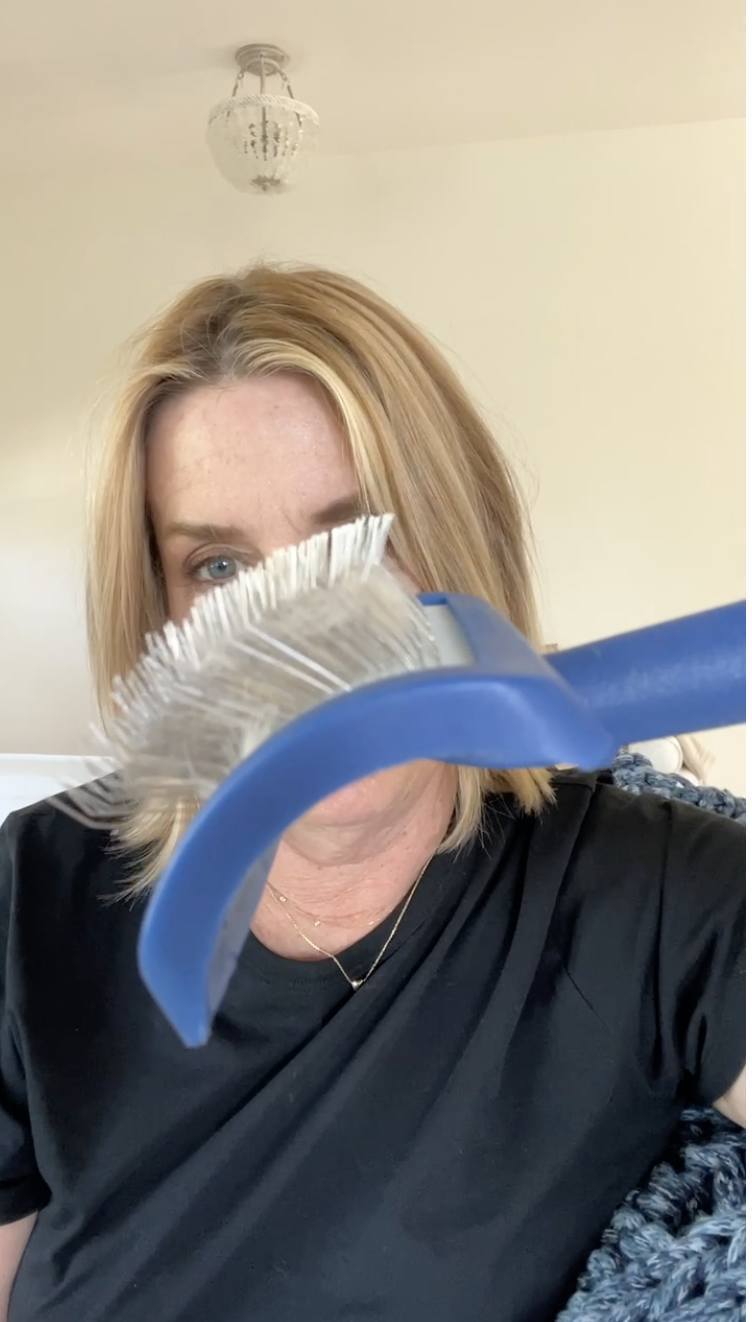
Long-angled pin slicker brush
A groomer once recommended a long-angled pin slicker brush for doodle dog coats. It’s the best choice for your regular brushing routine.
Brush correctly — don't just skim the surface
This is where a lot of owners go wrong. Running a brush over the top of a Goldendoodle's coat looks like brushing but doesn't actually reach the place where mats form — close to the skin. The technique that works is called line brushing: part the coat with your hand or a comb, hold the hair above the part, and brush the section below it from root to tip. Then move the part up and repeat. It takes longer than surface brushing but it's the only way to actually stay ahead of tangles.
After brushing, run a comb through the coat to check your work. If the comb catches anywhere, there's a tangle that needs more attention before it becomes a mat.
Prebook grooming appointments every 6-8 weeks
Professional grooming is not optional for Goldendoodles, especially curly-coated ones like Kai. I prebook appointments every 6-8 weeks so there's never a gap where the coat gets away from me. A good groomer will also catch early mats in spots I've missed and trim the high-risk areas — ears, face, paws, tail — that are harder to maintain at home.
Trim between appointments
Between grooming visits, I use a set of grooming tools at home to keep the ears, face, and tail trimmed. I also use a vacuum clipper system for between-appointment maintenance on the body. I'm honest with myself that professional grooming produces better results, but home maintenance is what prevents the mat emergencies between visits.
Mat Removal: What Works
Even with a solid prevention routine, mats happen. Here's the progression I use when I find one:

Step 1: Saturate with detangler or dematting spray
Never try to brush out a dry mat. Spray it thoroughly with a detangler spray or Cowboy Magic — a dematting product a groomer recommended to me years ago and one I now keep permanently stocked. Let it penetrate the mat for a minute before you touch it. The product softens the hair and reduces the friction that makes mat removal painful for the dog.
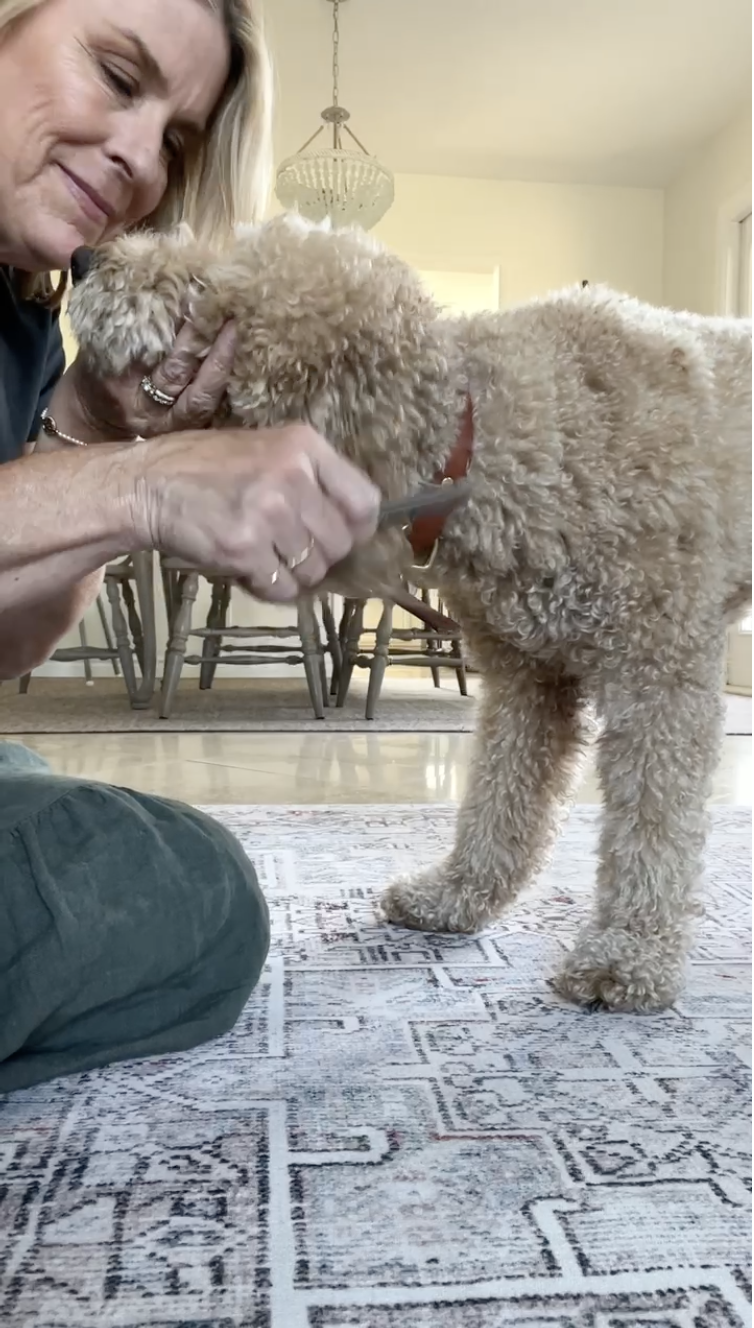
Step 2: Work from the outside in
Start at the outer edges of the mat — the loosest part — and work inward toward the skin. Never grab a mat and pull from the root. That's painful for the dog and compresses the mat further rather than loosening it.
Use your fingers first to gently separate the mat into smaller sections. Breaking a large mat into two or three smaller tangles makes the rest of the process significantly easier and less uncomfortable for your dog.
Step 3: Choose the right tool for the mat
For moderate tangles, a wide tooth comb works well once the mat has been separated by hand and saturated with product. Work through it gently, holding the hair between the mat and the skin with your free hand to prevent pulling.
For tighter, more stubborn mats, a dematting comb is worth reaching for. The serrated edges cut through the mat as you work through it, reducing the pulling significantly. It works well and is more efficient than a regular comb for serious tangles.
Step 4: Know when to stop
If a mat is very tight, very close to the skin, or covering a large area, stop. Continuing to work on it at home risks hurting your dog, damaging the skin underneath, or breaking the coat. Call your groomer and let them assess it professionally.
When the Only Option Is a Shave-Down
I want to talk about this honestly because it happens to a lot of Goldendoodle owners and nobody seems to want to say it plainly: sometimes the only humane option is to shave the coat down and start over.
Kai has been shaved down more than once. When mats are too tight, too numerous, or too close to the skin to safely remove by hand, the groomer's clippers are the right tool. Trying to brush out a coat that has reached that point is painful for the dog. A shave-down is not a failure — it's the responsible choice.
What to expect after a shave-down:
The coat will grow back, but it takes time — typically several months to return to a full length
The texture may be slightly different as it grows in, particularly in curly-coated dogs
Use the regrowth period to establish a better brushing routine before the coat gets long enough to mat again — this is the window to build the habit
The shave-down is also a reset. Every Goldendoodle owner I know has been there at least once. The goal is to learn from it and come out the other side with a maintenance routine that prevents it from happening again.
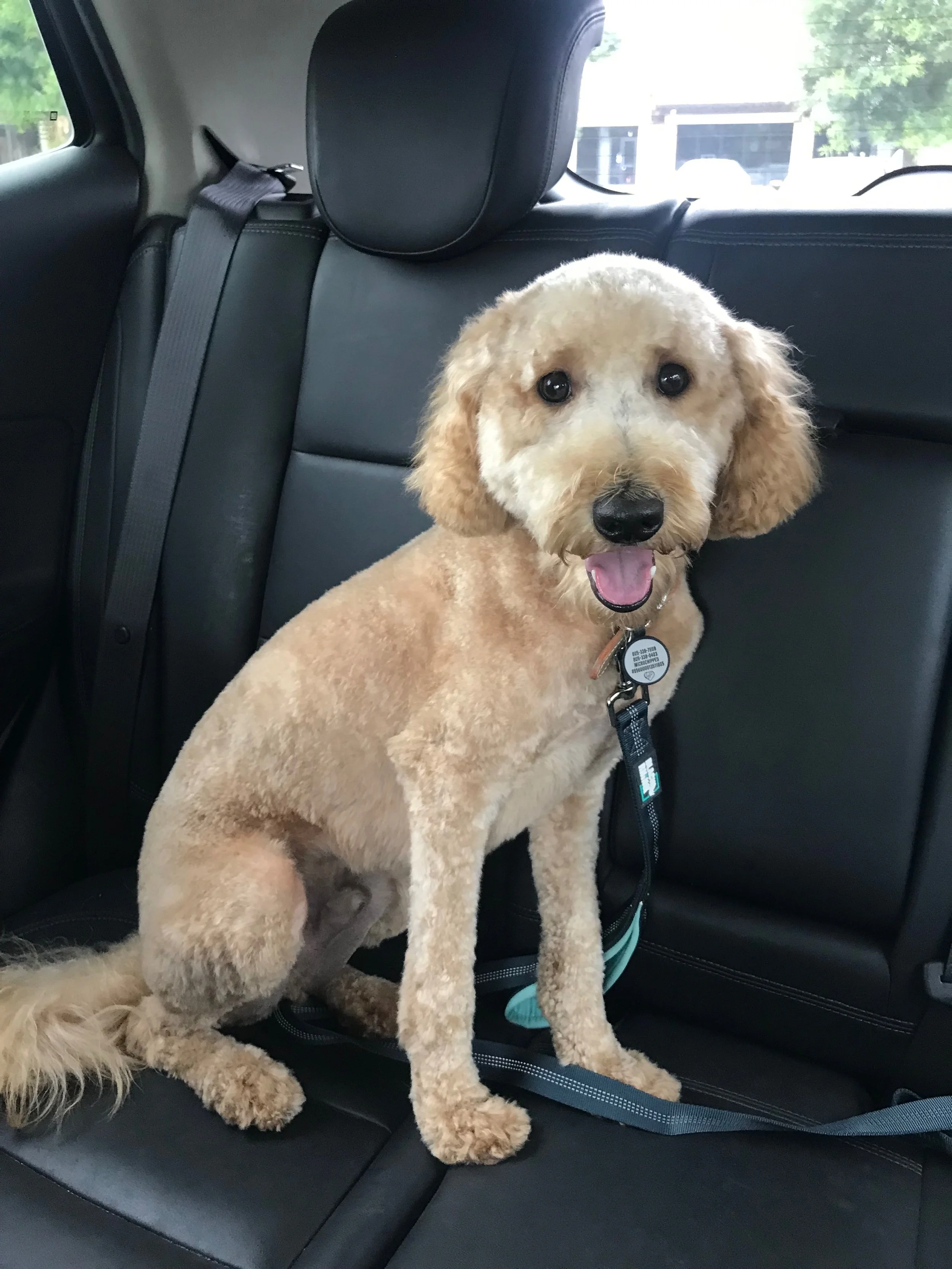
The Doodle Dog Shave Down
Every doodle owner has been there. When mats are too tight or too close to the skin, the only option is to shave them down and start over.
Home Grooming Tools Worth Having
These are the tools I use regularly at home between professional appointments:
Long pin slicker brush — The Chris Christensen is professional quality and is more expensive; the long pins are the key differentiator. As an alternative, the We Love Doodles slicker brush is very similar at lower price point.
Wide tooth comb — for checking brush work and working through moderate tangles
Dematting comb — for more stubborn tangles that the wide tooth comb won't move
Cowboy Magic or Skip the Groomer — for serious mat removal; a little goes a long way
Detangler spray — I love We Love Doodles :) It smells so good and is what I use for regular brushing sessions
Grooming scissors set — for keeping ears, face, and tail trimmed between appointments
Vacuum clipper system — I use the Oneisall grooming set for between-appointment body maintenance; it comes with a variety of attachments, and it catches the loose hair rather than sending it everywhere.
(The above products are affiliate links — everything listed is something we use on our own dogs.)
The Bottom Line
Matting is manageable. It's not inevitable if you stay on top of it — and even when it gets ahead of you, there are options. But the single most important thing you can do for a Goldendoodle with a curly or wavy coat is brush regularly, prebook your grooming appointments, and stay honest with yourself about whether the coat is getting away from you before it becomes a problem that requires a shave-down.
Kai has taught me more about matting than any blog post or grooming guide ever could. The tight curly coat is beautiful — and it's also relentless. Consistent brushing is the price of keeping it that way.
Related posts: