Kennel Cough in Goldendoodles: What Happened When Kai Got It at Doggy Daycare
By Our Doodle Life
As a participant in the Amazon Associates Program, I earn fees from purchases made through links in this post at no additional cost to you.
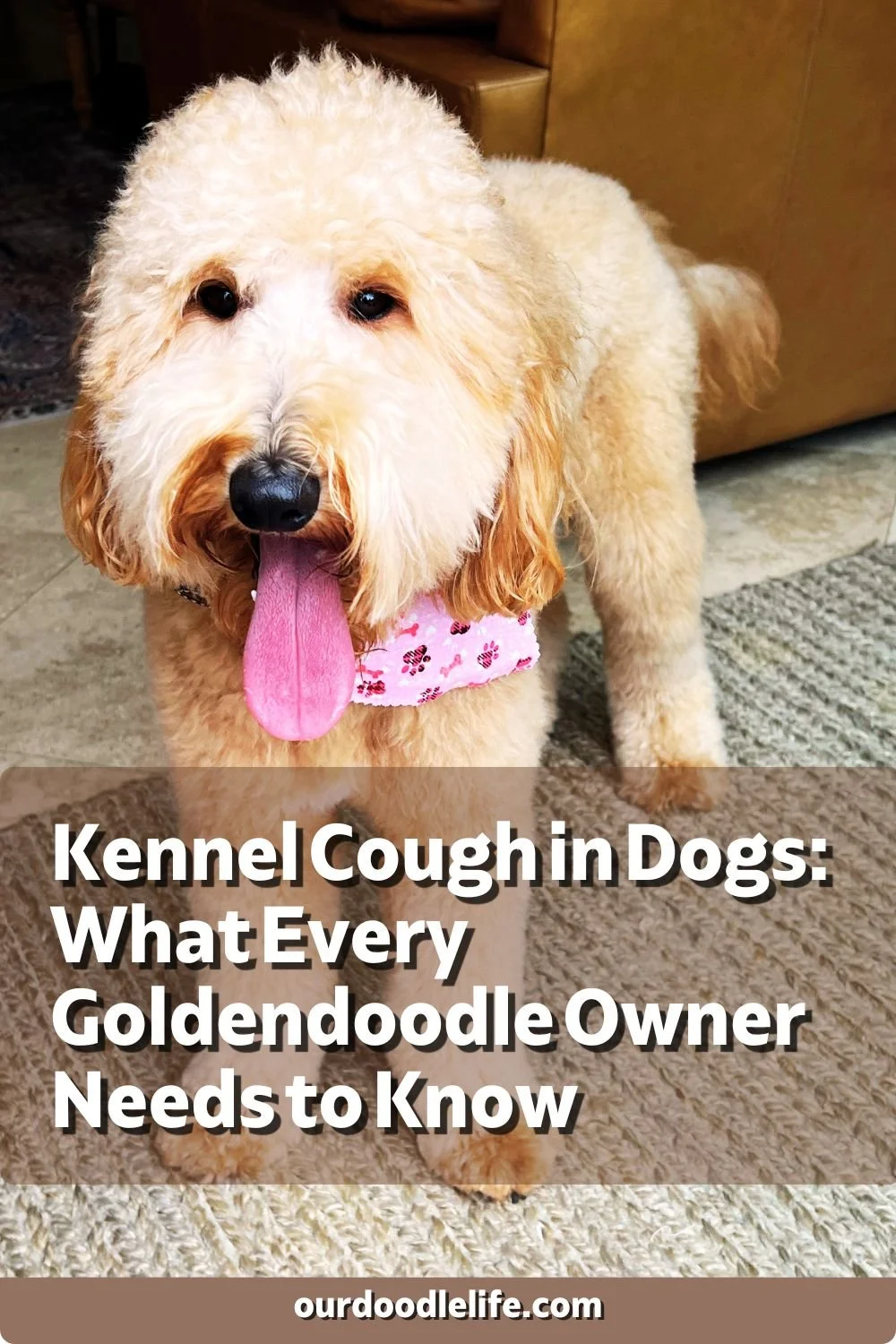
What we did when our Goldendoodle, Kai, got kennel cough.
As a participant in the Amazon Services LLC Associates Program, I earn fees paid by Amazon from qualifying purchases.
Kai was one year old the first time he visited a doggy daycare. Everything looked fine — the dogs were outside during playtime, the facility required proof of vaccination, and Kai was fully up to date on his Bordetella vaccine. I wasn't concerned about anything I saw.
That night he came home with a deep, gagging cough that stopped me in my tracks.
By the next morning we were at the vet. What followed was a fast recovery thanks to early treatment — but also a real shift in how I think about group play situations for my dogs. Here's everything I learned, including the one piece of advice our vet gave that I now share with every dog owner I know.
What Kennel Cough Actually Is
Kennel cough — formally known as canine infectious tracheobronchitis — is a highly contagious respiratory infection that spreads easily wherever dogs gather. It's transmitted through airborne droplets, direct contact between dogs, and shared surfaces like water bowls, toys, and kennel walls.
The name "kennel cough" is a little misleading because it implies the problem is dirty or poorly run facilities. That's not the case. Any environment where dogs are in close contact — daycare, boarding, dog parks, grooming salons, even vet waiting rooms — creates conditions where kennel cough can spread rapidly.
The Bordetella bacteria is the most common cause, which is why the Bordetella vaccine is standard in most facilities. But here's what many owners don't realize: the vaccine reduces the severity of infection and lowers the risk, but it doesn't guarantee full protection. Kai was vaccinated. The daycare required proof of vaccination. He still got it.
That's not a reason to skip the vaccine — it's a reason to understand what it does and doesn't do.
The Signs We Noticed
The symptom that alarmed me most was the sound. Kai's cough was deep and forceful — almost honking — and it made him gag afterward. It didn't sound anything like a normal cough or the occasional throat-clearing dogs do. It was persistent and clearly uncomfortable for him.
What made it especially startling was the timing. Kai had seemed completely fine during and after his daycare visit. There was no warning, no gradual onset. He came home, we went about our evening, and then that night the coughing started.
Common signs of kennel cough to watch for:
A deep, dry, honking cough — often described as sounding like something is stuck in the throat
Gagging or retching after coughing episodes
Runny nose
Sneezing
Lethargy
Reduced appetite in more severe cases
Low-grade fever
In mild cases dogs may act completely normal between coughing episodes — eating, playing, and behaving as usual. That can make owners think it's not serious enough to warrant a vet visit. Don't make that mistake.
What We Did — And What the Vet Said
I took Kai to the vet first thing the next morning. They confirmed kennel cough, prescribed antibiotics, and he improved quickly — within that same day. Catching it early made a significant difference.
The piece of advice our vet gave that I now pass on to every dog owner:
Don't try to manage kennel cough at home. Come in right away.
It's tempting to wait and see, especially when your dog seems otherwise okay between coughing fits. But kennel cough can develop into something more serious — particularly pneumonia — if left untreated or treated too late. The window for early intervention is narrow and the recovery with prompt treatment is fast. It's not worth the risk of waiting.
Signs that mean go immediately — don't wait for a regular appointment:
Labored or rapid breathing
Blue-tinged gums
Complete loss of appetite lasting more than a day
Extreme lethargy or inability to get up
Coughing up blood or thick discharge
For a straightforward case like Kai's, a same-day or next-morning appointment is appropriate. For any of the symptoms above, go to an emergency vet.
The Vaccination Reality
I want to address this directly because it's the question I get most often when I share Kai's story: if he was vaccinated, how did he still get it?
The Bordetella vaccine works similarly to the flu vaccine in humans — it significantly reduces your risk and the severity of infection, but it's not a guarantee of full immunity. The bacteria can mutate, and there are multiple strains of the organisms that cause kennel cough. The vaccine covers the most common ones but not all of them.
There's also the question of timing. The Bordetella vaccine needs time to build full immunity after administration — typically a few weeks. If your dog was recently vaccinated before a high-exposure situation, they may not have full protection yet.
None of this means you should skip the vaccine. The Bordetella vaccine is still absolutely worth getting, especially if your dog spends any time around other dogs. Think of it as reducing risk and severity rather than eliminating it entirely.
Most facilities that require vaccination are doing the right thing — it's a meaningful layer of protection even if it's not a perfect one.
Doggy Daycare — Is It Worth the Risk?
This is the honest conversation I wish someone had with me before Kai's first daycare visit.
Group play situations carry inherent risk, even in well-run facilities that do everything right. When you put a large number of dogs together in an enclosed space — or even an outdoor space with shared surfaces and close contact — you create ideal conditions for respiratory illness to spread. That's true regardless of vaccination requirements, cleanliness standards, or how attentive the staff are.
That doesn't mean all doggy daycares are bad. It means going in with clear eyes about the tradeoff.
What to look for when evaluating a facility:
Vaccination requirements for all dogs — Bordetella, rabies, and distemper at minimum
Small, well-supervised playgroups rather than large open groups
Good ventilation — outdoor play areas or well-ventilated indoor spaces
Visible cleanliness — water bowls cleaned regularly, surfaces disinfected
Staff who can tell you the ratio of dogs to handlers
A clear sick dog policy — what happens if a dog shows symptoms during the day
Questions worth asking before you drop your dog off:
What do you do if a dog shows signs of illness during the day?
How do you separate dogs if there's a conflict or health concern?
How often are water bowls and play surfaces cleaned?
What's your vaccination verification process?
A good facility will answer these questions without hesitation. Vague or defensive answers are a red flag.
What We Do Now
After Kai's experience, I made a considered decision to avoid group play situations for our dogs. That's a personal choice based on our specific circumstances — we have three Goldendoodles now, and the idea of one coming home sick and potentially passing it to the others is something I'd rather avoid.
That said, I still board my dogs when I need to travel. Boarding without group play — where dogs are in their own space and interact with staff rather than large groups of other dogs — carries meaningfully lower risk than open group daycare. If you're evaluating a boarding facility, look for one that keeps dogs separated or offers structured, supervised play in small groups rather than open free-for-all play sessions.
What we do now whenever our dogs have been around other dogs:
Monitor for coughing or gagging for several days after any group exposure
Keep vaccinations current — Bordetella on the schedule our vet recommends
Don't wait to call the vet if something sounds off
The biggest takeaway from Kai's kennel cough experience wasn't about the daycare or the vaccine. It was about how quickly things can change and how much faster recovery is when you act early. If your dog comes home from any group situation with a cough that sounds wrong, call your vet in the morning. Don't wait.
Products Worth Having on Hand
After going through kennel cough with Kai, I put together a short list of things I now keep on hand for any respiratory illness—or, honestly, any time one of the dogs comes home from being around other dogs and something seems off.
This PetMedic pet thermometer is the first thing I'd recommend—knowing whether your dog has a fever is one of the most useful pieces of information you can give your vet over the phone before you even come in. It’s quick and easy — simply aim at your dog’s belly or inner ear to get a quick reading. It lights up green, yellow, or red to help interpret the temperature.
A dog-safe disinfectant spray is essential for wiping down surfaces, bedding, bowls, and toys after any illness to prevent spreading it to other pets in the house. A humidifier running near where your dog rests can help soothe irritated airways during recovery — the same way it helps humans with respiratory symptoms. And we keep an immune support supplement in the rotation as a general preventive measure, especially during periods when the dogs have been around other animals. I'll fill in our specific product picks below—everything linked is something we've actually used.
Quick Reference: Kennel Cough at a Glance
What it is: Highly contagious canine respiratory infection
How it spreads: Airborne droplets, direct dog-to-dog contact, shared surfaces
Key symptoms: Deep honking cough, gagging, runny nose, sneezing, lethargy
What to do: Call your vet and get an appointment as soon as possible — don't manage at home
What to expect: With early treatment, most dogs recover quickly
Prevention: Keep Bordetella vaccination current; be thoughtful about high-exposure group settings
Have you dealt with kennel cough with your dog? Share your experience in the comments — the more owners know about this, the faster they'll recognize it and get their dogs the help they need.
Related posts: